Showing posts with label Stew. Show all posts

Wednesday, March 18, 2009

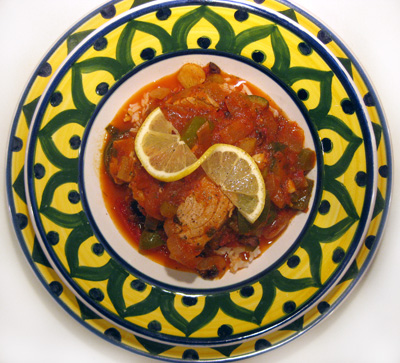
Provencal Fish Stew

fish stew

::: Constables Larder has moved to http://constableslarder.com :::

I only like to blog the successes unless there is humor or an interesting lesson in the duds. "Giff is an idiot" doesn't qualify as a lesson. Too obvious. I am pleased to say that last night's meal was an unqualified success. Even I, who tends to be hypercritical of my own dishes (to Lisl's annoyance), loved this. Essentially, you make a really good vegetable stew with provencal flavors, and then finish it off with the fish and serve on a bed of rice. Most satisfying!

wine bottleOur fishmonger had some really good looking tuna, so I had him cut some 1/2 slices adding up to just over a pound. I think a firm fleshed fish like tuna or halibut is best for this recipe. We served this dish with a delicious white wine from the Jongieux region in France called Carrel Vin de Savoie, and some freshly baked bread.


Provencal Fish Stew
Serves 4 to 6

~1 lb raw tuna, cut into 1 inch cubes
1 large vidalia onion, chopped
1 celery stalk, chopped
1 medium zucchini, halved and sliced
1 green pepper, chopped
1 fennel bulb, chopped
7 small/medium garlic cloves (and if you really love garlic, it can take more)
large handful of kalamata olives, chopped
1 28 oz can of crushed tomatoes
1/2 cup dry white wine (or dry vermouth)
1/2 cup water
handful of parsley, chopped
handful of fennel fronds, chopped
large sprig of thyme (or several, tied together)
1 bay leaf
4 or 5 medium tomatoes, sliced
1 medium red onion, sliced into rings
juice of 1/2 lemon
salt and pepper
olive oil
served with 1 cup of long grain white rice

fish stew mise

In a dutch oven or stew pot, heat up a splash of olive oil on moderate heat and saute the onions until translucent. Add in the zucchini and cook for 5 minutes, then add in the chopped celery, fennel, green pepper and garlic, along with a couple pinches of salt (not too much since the olives will add saltiness). Continue to saute for another 10 to 15 minutes, stirring occasionally and letting the vegetables get tender.

Finely chop the parsley and fennel frond and add to the pot. Toss in a bay leaf and a large sprig of fresh thyme, along with the 1/2 cup of white wine, 1/2 cup of water, crushed tomatoes, kalamata olives, and juice from half a lemon. Stir all together and cook on a light simmer for another 10 to 15 minutes.
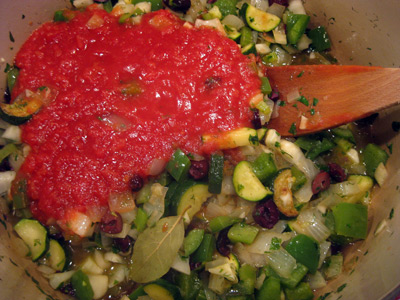
fish stew - in process

Thinly slice the tomatoes and add to the pot. Thinly slice the red onion into rings and stir into the pot. Cover and continue to cook on a light simmer for 20 to 30 more minutes, letting all the flavors meld together. Taste for salt and pepper.

Slice the tuna into rough cubes about 1/2 to 1 inch a side. Start cooking your rice.

When your rice is 5 to 10 minutes from being done, add the tuna to the stew pot. The fish should only need 5 to 10 minutes to become firm and cook through, no more.

Plate by spooning a mound of rice into a bowl, ladle the fish stew on top, and then grind a little fresh pepper.
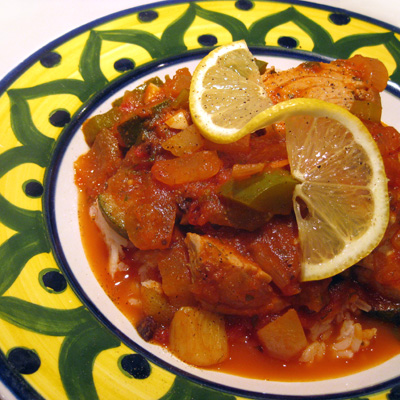
fish stew

Sunday, March 15, 2009

Carbonnades a la Flamande (Beef and Onions Braised in Beer)

::: Constables Larder has moved to http://constableslarder.com :::

I wonder, as I stumble through the flurry of activities that inevitably follow the arrival of a newborn, if a slight halo of awe still hovers around me. When our daughter arrived almost 4 years ago, the C section at 34 weeks was mentally intense and nerve wracking, albeit ultimately wonderful. Natural childbirth (and for little James, Lisl chose to go entirely natural, without pain medication), on the other hand, was incredibly intense in a physical way and in some ways very surreal.

I was surrounded by women supporting a woman doing something powerful and fundamental, common and yet never ever mundane. It was amazing. The object of my awe is, of course, Lisl. Such strength and bravery through the 41 hour labor process was magnificent to behold. I know that these are not unique feelings in a husband after the birth of a child, yet the very ubiquity of my emotions is one of the quirks of this thing called childbirth. It is commonplace and continual, and yet so colossal every single time. I never quite grasped that until now.

However, the title of this blog post isn't "ruminations on childbirth". Food! I wanted Lisl's first meal home from the hospital to be excellent, but I also knew that I was only going to have sporadic time available... it needed to be something I could start the night before. Richard Olney has a great recipe for beef and beer stew, but I decided to try merging two different Julia Child inspirations: Onion Soup and Carbonnades a la Flamande (beef and onions braised in beer).

French onion soup gets so much flavor from the long cooking and carmelization of the onions, so I brought that step to this recipe. The sweetness of the extra-carmelized onions complements the beer really well. I did not use any beef broth or water; rather the beef and onions was braised entirely in a "black and tan", i.e. one stout and one pale ale (there's lots of flexibility on beer choice -- it's very personal preference: Julia Child calls for a pilsner-type beer, and this is also really good with a Belgian abbey-styled brew).

I cooked the braise for a very long time on low heat, and the results were rich and delicious. When it received high compliments from both Lisl and my visiting mother, who got me started with a love of cooking, I knew that this was a winner. I do not have a photo of the plated dish, but with new baby and visiting family, I'm sure you will let me off the hook!


Carbonnades a la Flamande (Black and Tan)
(Beef, Onion and Beer Stew)

3 lb chuck steak
5 or 6 medium to large yellow or spanish onions
3 tbsp unsalted butter
1 tbsp olive oil
2 tbsp brown sugar
salt
handful of parsley w/ stems
1 bay leaf
1 bottle of a good stout beer (Guinness most common)
1 bottle of pale ale (Bass or Harp)

Pre-heat oven to 300F.

Cut the beef into slices about 2 inches by 4 inches, and 1/2 inch thick. In a dutch oven, heat a splash of olive oil on medium-high heat until a drop of water sizzles, then brown the beef in batches, adding more oil as needed between batches.You just want to sear the outside, but not fully cook the beef. Cook the meat in batches so that the beef is not packed in too closely together. Set the browned beef and any juices aside on a large plate or bowl. Deglaze the bottom of the pot with a small amount of water and pour the juices over the beef.

Place the pot back on the stove top. It is now time for the onions.

carbonnades

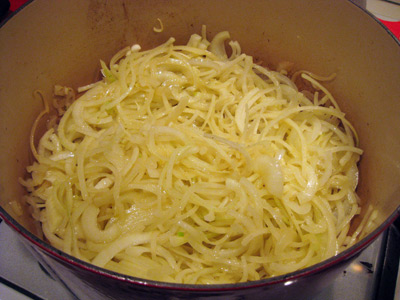
Peel the onions, cut them in half, and then slice them very thin. On low, heat 3 tbsp of butter and 1 tbsp of olive oil in a dutch oven or stewing pot, and slowly saute the onions for 15 minutes. Stir in 1/2 tsp of salt and 2 tbsp of brown sugar, turn up the heat to moderate, and cook for 30 to 40 minutes until the onions are golden and starting to brown. Turn off the heat and remove onions to the side.

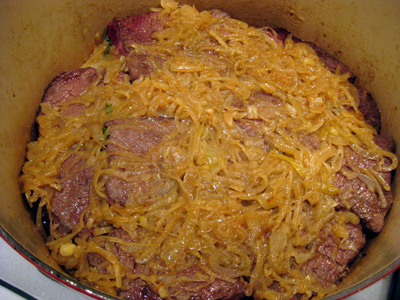
Create a layer of half the beef on the bottom of the pot, then spoon half the onions on top and spread around. Tie the parsley and bay leaf together with kitchen twine and place on top of the onions. Sprinkle a pinch of salt around.

Then create a layer with the rest of the beef, and top with the remaining onions and a pinch of salt sprinkled around.

carbonnades

Pour in the beer until the beef and onions are just covered. For me, it took the full contents of both the bottle of stout (in my case, I used Keegan's Mothers Milk) and bottle of pale ale. Bring the stove burner back up to a moderate flame. When the beer is just starting to simmer, cover and place in the oven.

carbonnades

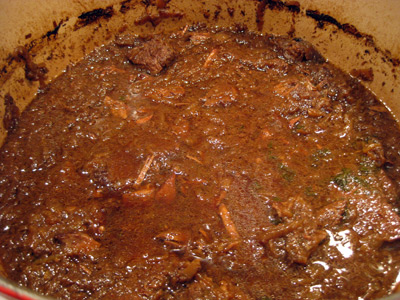
Cook for 2 hours and then uncover and continue to cook for another hour or two until the liquid has concentrated down somewhat and the meat is completely tender. Skim the fat oil off the top. Taste the remaining liquid, and adjust the flavor with a sprinkle of salt or brown sugar if you desire.

carbonnades

The above picture was actually taken after I had served much of the top layer of beef, which is why the meat looks so shredded because it really falls apart at the lightest touch at this point. However, I wanted to show color and consistency.

I served this with basmati rice and swiss chard sauted with a touch of lemon juice, and my father brought the most amazing red wine. It was a fitting celebration of Lisl and the new baby.

Sunday, March 8, 2009

Savoring Spring: Lamb Merguez and Lentil Stew

wine bottle

::: Constables Larder has moved to http://constableslarder.com :::

Emerging from winter always brings an interesting feeling of renewal. Just the other day, I was sadly mired in longing for real produce. Tomatoes so fresh they are a meal unto themselves. Opening the door to pick a handful of basil and thyme. The flood of zucchinis and Japanese eggplant.

There is still quite a wait to reach those days, but at least yesterday we had deliciously warm weather. In an amusing dichotomy, the kids down the street had a snowball fight in short sleeves and shorts. As for me, I enjoyed an almost French stroll with my dog, walking into town and returning home with supplies from the butcher and the wine shop. If I was not baking my own bread these days, a baguette would have completed the picture. And some cheese. Really good cheese. And why do the carrots you find in French outdoor markets make our carrots look so pathetic? I digress. French markets do that.

I was pleased to see that our butcher had made some fresh lamb merguez sausages, and that became our dinner. I threw together a country stew that was quick to make and complemented the full-bodied Spanish red I had picked up. This kind of meal is cozy and handy when time is short. You want to make sure you like the sausages, since they provide much of the flavor heavy-lifting in the stew.


Lamb Merguez and Lentil Stew

Serves 2
4 lamb merguez sausages, skins removed and chopped
1 onion, diced
14 oz whole, skinless tomatoes, chopped (with liquid)
1/2 cup green lentils
1/2 cup dry white wine
1/2 cup water
10 oz spinach, washed and chopped
salt
2 eggs (optional)

In a deep saute pan, heat up a splash of olive oil and brown the sausage meat, then remove to the side. Place a tablespoon of the oil back in the pan, and discard the rest.

Saute the onions until translucent, then add in the tomatoes and cook for a couple of minutes. Add in the lentils, wine, water and sausage meat and simmer for 20 minutes.

Stir in the spinach and continue to let simmer for 15 more minutes, or until the lentils are soft. If the stew starts looking too dry, add a little more water (you want it to finish moist but not soupy). Salt to taste -- this will depend on the strength of the sausages.

I served this with the wine and some thickly sliced bread, but if we had not been out of eggs, I would finished the stew off with two eggs baked on top (with a little ground pepper and a pinch of paprika on top, and the pot covered and on low heat). Apparently this is trendy now, but I ignore such things. I just think it would have tasted great. To see what I am talking about, check out We Are Never Full's Eggs Cooked in Ragu.

Sunday, February 8, 2009

Andouille and Yellow Eye Bean Stew

yellow eye bean stew

::: Constables Larder has moved to http://constableslarder.com :::

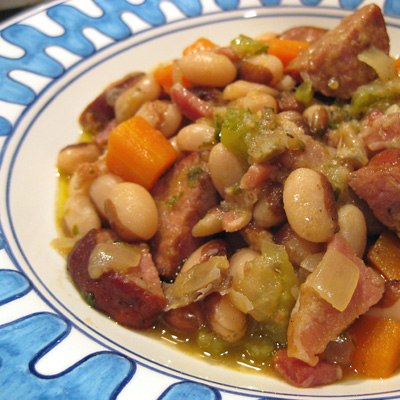
On a cold evening, I like settling down to a healthy bean stew. This one is particularly simple to make, and lets the smokiness and spicy heat of andouille sausage do much of the work.

1/2 lb dried yellow eye beans*
1 smoked andouille sausage (approx 10" long)
3 slickes thick cut bacon, sliced into 1/2 " pieces
1/2 large onion, chopped
2 carrots, roughly chopped
2 celery stalks, chopped
handful of parsley, chopped
splash of dry vermouth or dry white wine
1 cup chicken stock (optional)
1/4 to 1/2 tsp salt

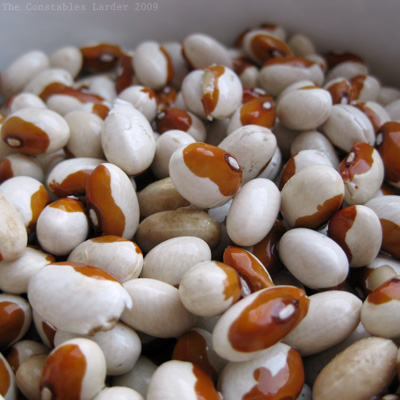
yellow eye beans
Yellow Eye Beans

I like to soak my beans whenever possible to speed cooking time, but in any case make sure you rinse the beans and check for any small pebbles. Fill a large pot with water 1 inch above the level of the beans, bring to a boil, then let simmer, loosely covered for 30 minutes. You want the beans to be no more than al dente by the time you move them into the stew pot.

Halve the andouille sausage lengthwise and then cut into 1/2" wide pieces.

While the beans cook, in a heavy bottomed pan (I was using a 3" deep cast iron pan), cook the bacon on medium heat for 2 or 3 minutes, then add the sausage. Before the bacon turns crispy, remove the meat to a side bowl, add a splash of olive oil to the pot, and add in the onion.

Cook the onion, stirring, for a few minutes, then add in the carrots and celery. Pour in a splash of dry vermouth and scrape up anything on the bottom of the pan. Toss in the parley, 1/4 tsp of salt, and the meat. Lower the heat, and let simmer.

At this point, reserve a couple cups of the bean broth (more if you do not have chicken broth), and add the beans to the pot. Pour in a cup of chicken broth and then add the bean broth until the liquid is just below the top of the vegetables. Let simmer, stirring occasionally, for another 40 minutes or so, until the beans are tender. Check for salt along the way. I used a little more than 1/4 tsp, but your choice of bacon and sausage can affect saltiness a great deal, so don't add too much too soon.

Serve this by adding a little freshly chopped parsley and drizzling some olive oil on top.


Note: I left garlic out of this particular dish, but it would go quite well. One could also serve this dish with a garlic, parsley and olive oil pistou if you wanted that flavor kick.

Note on beans: I really liked the yellow eye beans from Rancho Gordo -- they were firm and mild in taste, and a little more interesting than great northern. If you do not have yellow eye, then I think great northern, flageolet, or vallarta beans would all be nice alternatives.

While this is a fairly classic bean dish, I think I will submit it to My Legume Love Affair, a blog event I always enjoy, hosted this month by The Well Seasoned Cook.

Saturday, December 6, 2008

Peasant Bean Stew

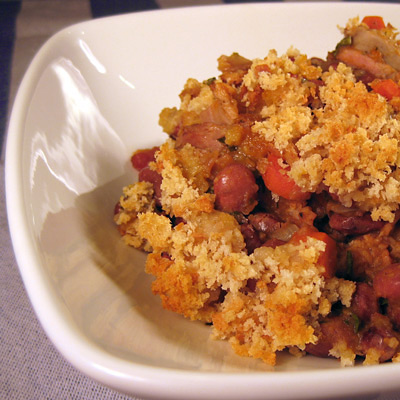
Peasant bean stew plated

::: Constables Larder has moved to http://constableslarder.com :::

Yesterday I set out to make a cassoulet-inspired dish, without sacrificing my entire Saturday to the process. Anyone who has been reading this blog knows that I'm in love with peasant / comfort food. My problem with many cassoulets I've had in restaurants, even very reputable ones, is how dry they tend to be. I've read Julia Child's cassoulet recipe in Mastering the Art of French Cooking, but always procrastinate taking it on because of the time involved. Here is one attempt to solve both those problems, and I admit to being very happy with the result.

The post is long because I've gone into some detail, but the actual time involved was quite efficient.

Peasant Bean Stew

3/4 lb dried red nightfall beans (or great northern)
1 bunch parsley, tied with kitchen string
4 carrots. 2 whole, 2 chopped
2 celery stalks
4 sweet italian sausages (4" in length)
4 or 5 slices good quality bacon, sliced into 1/2 to 1" pieces
1 to 2 inches of hot sopresatta salami, chopped
1 medium yellow onion, finely chopped
3 or 4 garlic cloves, minced
1/2 cup red wine
1 full tbsp of finely chopped fresh tarragon
2 or 3 tbsp finely chopped parsley
1 1/2 cups bread crumbs (3 slices of farm bread pulsed in a food processor)
reserved bean cooking liquid (from making the dish)
salt and pepper
olive oil

Peasant bean stew 1

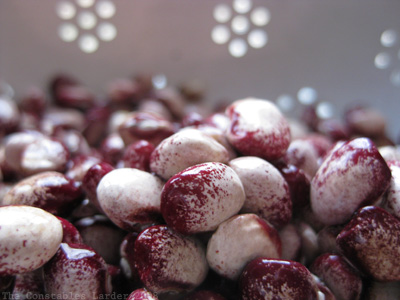
The beans: I used red nightfall beans (part of my Rancho Gordo habit), but there are many kinds of beans that would work well for this dish. Flageolet or Tepary beans would be nice, as would I think Cannellini beans. If you are working from a normal US supermarket you can usually find Great Northern Beans.

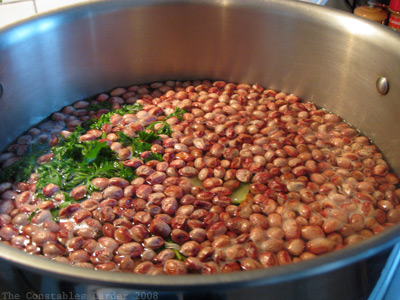
I put the beans in cold water to soak in the morning, but this is an optional step. It does speed up cooking time, however. I also do a quick, and optional, step at the start to reduce the enzyme in beans that causes gas in folks not used to eating legumes. This step, suggested by Peter at Kalofagas, is a bit easier than the steps Bittman suggests in How to Cook Everything: you put the beans in cold water in a large pot, bring to a boil for 2 minutes and drain.

Place the beans back in the pot, fill with cold water to an inch over the top of the beans. Add in two peeled carrots, 2 stalks of celery (halved to fit), a bay leaf, and a bunch of parsley tied up with kitchen string. Optionally, you can toss in part of a ham hock or some bacon here. Bring back to a boil, and then reduce to a light simmer. Turn off the heat when the beans are just tender -- cooking time will vary but start testing around 40 minutes in. Save the bean cooking liquid in one bowl, and put the beans aside in another.

Peasant bean stew 2

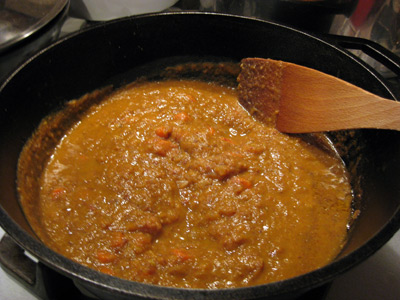
Discard the parsley. Place the cooked carrots and celery in a food processor, along with 1/2 cup of the cooked beans and 1/2 cup of the cooking liquid. Puree and set aside.

Note: I then switched to a 3" deep cast iron skillet, which I placed in the oven when prep was done. If you don't have something similar, you can use a medium-size dutch oven or continue using the pan you used to cook the beans and transfer to a baking dish before putting in oven.

Preheat oven to 375F.

Cook the bacon in the deep skillet until almost crispy, then set aside. (Note: I would have preferred to have worked from good slab bacon, rather than thin slices, and thus have chunkier pieces, but had to work with what I had on hand) Brown the sausages in the skillet until just firm, and set aside. Drain the excess oil.

Add a splash of olive oil and saute the onion and garlic on medium-low heat, stirring regularly, until the onion starts to turn translucent. Add the chopped carrot and cook for another couple of minutes, then pour in the puree. Add 1/2 cup of red wine, another 1/2 cup of the reserved bean cooking liquid, and salt and pepper to taste. Simmer for several minutes.

Peasant bean stew 3

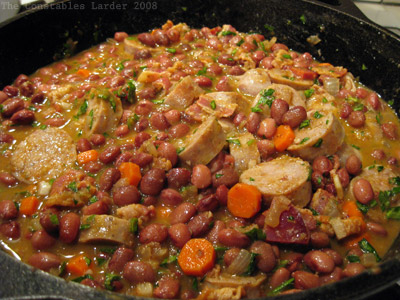
Slice the sausages into 1/2 inch segments, and add the sausage, bacon and hot salami to the pot. Then gently stir in the beans, chopped tarragon, and parsley. Add some of the bean cooking liquid until the pot starts to get a bit soupy (see below), but not to the point where everything is swimming. Keep the rest of the bean cooking liquid on hand, however, in case you need it at the end if it comes out of the oven drier than you want.

Peasant bean stew 3

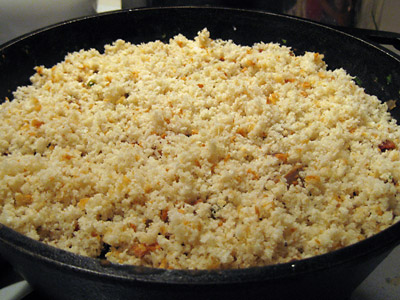
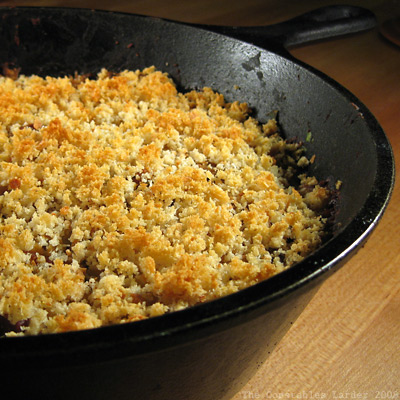
Turn off the heat and sprinkle bread crumbs on top. Place in oven at 375F for 15 minutes, then turn down the heat to 350F.

Peasant bean stew 4

Bake the dish for an hour or so. Optional: about 45-50 minutes in, you can test for how dry/moist the dish is by breaking into the breadcrumb crust and checking for moisture deeper into the dish. If it is looking too dry, ladle some more cooking broth around the top and place back in the oven for long enough that the bread crumbs get dry and toasted again.

Peasant bean stew 5

There are so many directions you can take a dish like this, in terms of the herbs you use and the meats. It would be a great use for leftover brisket or a pork shoulder braise. If you do end up doing a riff on this recipe and like the results, please let me know!

Thursday, November 13, 2008

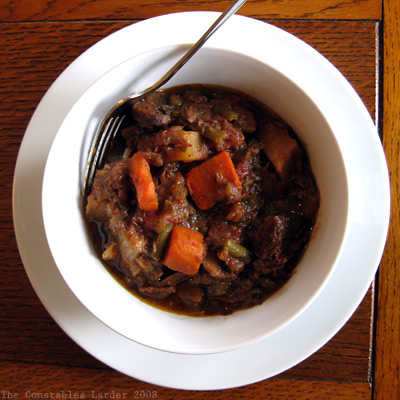
Beef Stew (our version)

beef stew plated

::: Constables Larder has moved to http://constableslarder.com :::

I am chained to the bed today, fending off percocet-induced fuzziness after minor surgery yesterday (not to worry, I should be up again in no time). Lisl had to stay home from work to help me, and one lovely side benefit is the wonderful smell of baking bread wafting through the house. In between attempts to get work done, I've been catching up on food blogs, flipping through cookbooks, twittering more than usual, and trying to think how I can be as funny as Zen. I've decided that I need to accept my limitations. :)

I also decided to update my beef stew recipe on here since I made a big batch right before heading to the hospital (when I was still allowed to lift my dutch oven) and took a few pics of the process.

Most food bloggers probably have their own favorite beef stew recipe; ours comes from my mother, and one day many years ago I took notes as she put it together. She cooks the dish by feel so it is never exactly the same, but the basics are as follows:

2 medium onions, diced
2 cloves minced garlic
10 mushrooms (white or cremini), thickly sliced
2 pounds round or chuck beef
flour
5 carrots, thickly chopped
5 stalks celery, chopped
2 large russet potatoes, cut into large chunks
large handful of green beans, ends removed and cut into 1" pieces
1.5 cups frozen peas
3 bay leaves
1 cup red wine
2 tbsp tomato paste
very large handful of parsley, chopped
1 tbsp oregano
salt & pepper

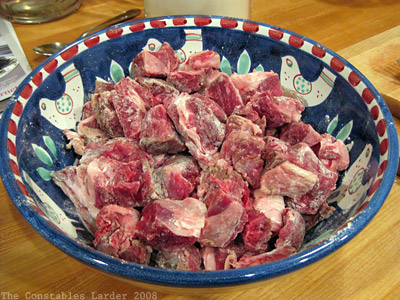
Trim some of the excess fat off of the beef, but leave some to add richness. Cut the beef into cubes of preferred size (I do rough cubes of about an inch) and lightly flour on all sides.

beef stew 1

Start boiling a kettle of water (or a medium pot) and pre-heat oven to 315F.

In a large oven-proof pot such as a dutch oven, heat some olive oil and saute the onions and garlic over medium-low heat. As they start to turn translucent, add in your mushrooms. Cook for several minutes

Remove the onions and mushrooms to a large bowl, add a little more olive oil to the pot, and brown the beef in batches over slightly higher heat (adding olive oil as necessary). Just brown the beef, do not cook. Remove the beef to the bowl with onions and mushrooms, and deglaze the bottom of the pot with some of the boiling water.

Your kitchen should smell amazing at this point. :)

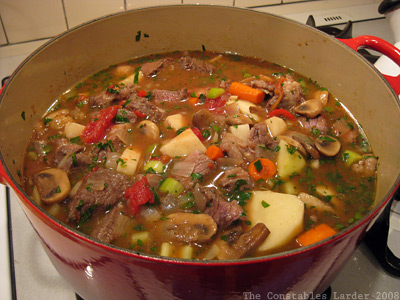
Turn the heat down to low, and then return the meat, onions and mushrooms to the pot. Add everything except for the green beans and peas. Add 1 tsp of salt (you'll probably want more, but can add to taste later). Add the wine and then pour in boiling water until the water level is just below the tops of the meat and vegetables.

beef stew 2

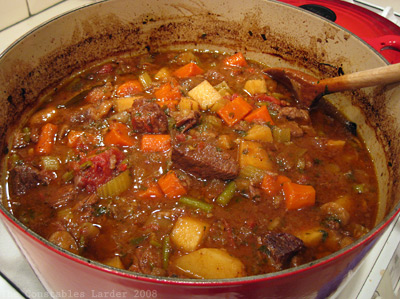
Bring to a bubbling simmer on the stovetop, then cover and place in the oven for an hour. After an hour, skim any excess oil off of the top, then stir in the green beans and peas, and taste for salt. Return to the oven for another 2 hours, periodically pulling it out for a stir. The longer you can slow-cook it, the thicker it should get as the vegetables break down and thicken the stew. (you don't want to try to thicken it by boiling off liquid)

beef stew 3

I wait to add pepper until serving, and will often add some freshly chopped parsley. While it is very good on its own, we often serve with egg noodles or rice.

A few notes:
If you need to cook your stew on the stovetop, do your best to keep the simmer very light, and stir regularly especially if you have a thin-bottomed pot, because you do not want the bottom of the stew to burn. That happened to me once and the burnt flavor permeated the whole thing!

You can totally mix up the amounts of each vegetable to fit your flavor profile, or add more red wine to make it richer, or use rosemary instead of oregano, etc. This last stew I made (which is where the photographs came from) included some san marzano tomatoes, chunks of celery root, a jalapeno pepper, and we did not have any peas. It was delicious, but the base recipe my family likes to work off of is as described above.